Colleges by Location
Colleges by Fields of Study
Colleges by Tuition Range
Colleges by GPA Range
College by SAT Range
Colleges by ACT Score
Graduate Schools by Location
Graduate Schools by Fields of Study
Graduate School by Degree Type
Paying for Graduate School
Online Graduate Programs
Test Preparation
Career Planning
College Planning
Graduate School Planning
Applying to Graduate School
- More
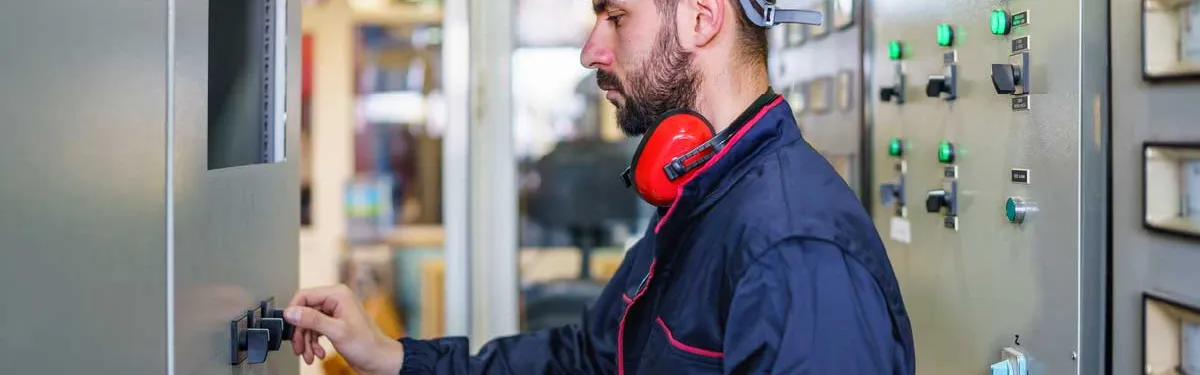

| Median Wage (USD, 2024) | Projected Job Openings (2023-2033) | Projected Growth (2023-2033) | |
|---|---|---|---|
| National Statistics | $99,670 | 2500 | -9.4% |
| State Statistics | - | - | - |
| City Statistics | - | - | - |
Experience Requirements Overview
- Job Zone Two: Some Preparation Needed
- Some previous work-related skill, knowledge, or experience is usually needed. For example, a teller would benefit from experience working directly with the public.
- These occupations usually require a high school diploma.
- Employees in these occupations need anywhere from a few months to one year of working with experienced employees. A recognized apprenticeship program may be associated with these occupations.
Education, Training and Experience
Required Level of Education: High School Diploma - or the equivalent (for example, GED)
Related Work Experience: Over 2 years, up to and including 4 years
On-Site or In-Plant Training: Over 2 years, up to and including 4 years
On-the-Job Training: Over 2 years, up to and including 4 years
Detailed Work Activities
- Watch operating equipment to detect malfunctions.
- Operate energy distribution equipment.
- Operate energy production equipment.
- Adjust equipment controls to regulate flow of water, cleaning solutions, or other liquids.
- Adjust equipment to ensure optimal performance.
Work Values
Achievement
Occupations that satisfy this work value are results oriented and allow employees to use their strongest abilities, giving them a feeling of accomplishment. Corresponding needs are Ability Utilization and Achievement.
Working Conditions
Recognition
Relationships
Support
Independence
Tasks
- Control generator output to match the phase, frequency, or voltage of electricity supplied to panels.
- Take regulatory action, based on readings from charts, meters and gauges, at established intervals.
- Control power generating equipment, including boilers, turbines, generators, or reactors, using control boards or semi-automatic equipment.
- Start or stop generators, auxiliary pumping equipment, turbines, or other power plant equipment as necessary.
- Monitor power plant equipment and indicators to detect evidence of operating problems.
- Operate or maintain distributed power generation equipment, including fuel cells or microturbines, to produce energy on-site for manufacturing or other commercial purposes.
- Open and close valves and switches in sequence to start or shut down auxiliary units.
- Control or maintain auxiliary equipment, such as pumps, fans, compressors, condensers, feedwater heaters, filters, or chlorinators, to supply water, fuel, lubricants, air, or auxiliary power.
- Regulate equipment operations and conditions, such as water levels, based on instrument data or from computers.
- Inspect records or log book entries or communicate with plant personnel to assess equipment operating status.
- Clean, lubricate, or maintain equipment, such as generators, turbines, pumps, or compressors, to prevent failure or deterioration.
- Record and compile operational data by completing and maintaining forms, logs, or reports.
- Make adjustments or minor repairs, such as tightening leaking gland or pipe joints.
- Adjust controls to generate specified electrical power or to regulate the flow of power between generating stations and substations.
- Operate, control, or monitor equipment, such as acid or gas carbon dioxide removal units, carbon dioxide compressors, or pipelines, to capture, store, or transport carbon dioxide exhaust.
- Operate, control, or monitor gasifiers or related equipment, such as coolers, water quenches, water gas shifts reactors, or sulfur recovery units, to produce syngas or electricity from coal.
- Communicate with systems operators to regulate and coordinate line voltages and transmission loads and frequencies.
- Operate, control, or monitor integrated gasification combined cycle (IGCC) or related equipment, such as air separation units, to generate electricity from coal.
- Receive outage calls and request necessary personnel during power outages or emergencies.
- Collect oil, water, or electrolyte samples for laboratory analysis.
- Examine and test electrical power distribution machinery and equipment, using testing devices.
- Place standby emergency electrical generators on line in emergencies and monitor the temperature, output, and lubrication of the system.
- Analyze the layout, instrumentation, or function of electrical generation or transmission facilities.
- Diagnose or troubleshoot problems with gas collection systems.
- Monitor well fields periodically to ensure proper functioning and performance.
- Operate landfill gas, methane, or natural gas fueled electrical generation systems.
- Prepare and submit compliance, operational, and safety forms or reports.
- Repair or replace gas piping.
- Trace electrical circuitry to ensure compliance of electrical systems with applicable codes or laws.
- Verify that well field monitoring data conforms to applicable regulations.
Work Styles
Achievement/Effort
Job requires establishing and maintaining personally challenging achievement goals and exerting effort toward mastering tasks.
Persistence
Initiative
Leadership
Cooperation
Concern for Others
Social Orientation
Self-Control
Stress Tolerance
Adaptability/Flexibility
Dependability
Attention to Detail
Integrity
Independence
Innovation
Analytical Thinking
Data Source: This page includes information from the O*NET 30.0 Database by the U.S. Department of Labor, Employment and Training Administration (USDOL/ETA). Used under the CC BY 4.0 license. O*NET® is a trademark of USDOL/ETA. This page includes Employment Projections program, Occupational Employment and Wage Statistics program, U.S. Bureau of Labor Statistics.