Colleges by Location
Colleges by Fields of Study
Colleges by Tuition Range
Colleges by GPA Range
College by SAT Range
Colleges by ACT Score
Graduate Schools by Location
Graduate Schools by Fields of Study
Graduate School by Degree Type
Paying for Graduate School
Online Graduate Programs
Test Preparation
Career Planning
College Planning
Graduate School Planning
Applying to Graduate School
- More

| Median Wage (USD, 2024) | Projected Job Openings (2023-2033) | Projected Growth (2023-2033) | |
|---|---|---|---|
| National Statistics | $41,230 | 15100 | -2.5% |
| State Statistics | - | - | - |
| City Statistics | - | - | - |
Experience Requirements Overview
- Job Zone Two: Some Preparation Needed
- Some previous work-related skill, knowledge, or experience is usually needed. For example, a teller would benefit from experience working directly with the public.
- These occupations usually require a high school diploma.
- Employees in these occupations need anywhere from a few months to one year of working with experienced employees. A recognized apprenticeship program may be associated with these occupations.
Education, Training and Experience
Required Level of Education: High School Diploma - or the equivalent (for example, GED)
Related Work Experience: N.A.
On-Site or In-Plant Training: N.A.
On-the-Job Training: Over 1 month, up to and including 3 months
Detailed Work Activities
- Monitor equipment operation to ensure that products are not flawed.
- Inspect metal, plastic, or composite products.
- Measure dimensions of completed products or workpieces to verify conformance to specifications.
- Operate metal or plastic forming equipment.
- Mount materials or workpieces onto production equipment.
Work Values
Achievement
Occupations that satisfy this work value are results oriented and allow employees to use their strongest abilities, giving them a feeling of accomplishment. Corresponding needs are Ability Utilization and Achievement.
Working Conditions
Recognition
Relationships
Support
Independence
Tasks
- Measure and visually inspect products for surface and dimension defects to ensure conformance to specifications, using precision measuring instruments.
- Observe continuous operation of automatic machines to ensure that products meet specifications and to detect jams or malfunctions, making adjustments as necessary.
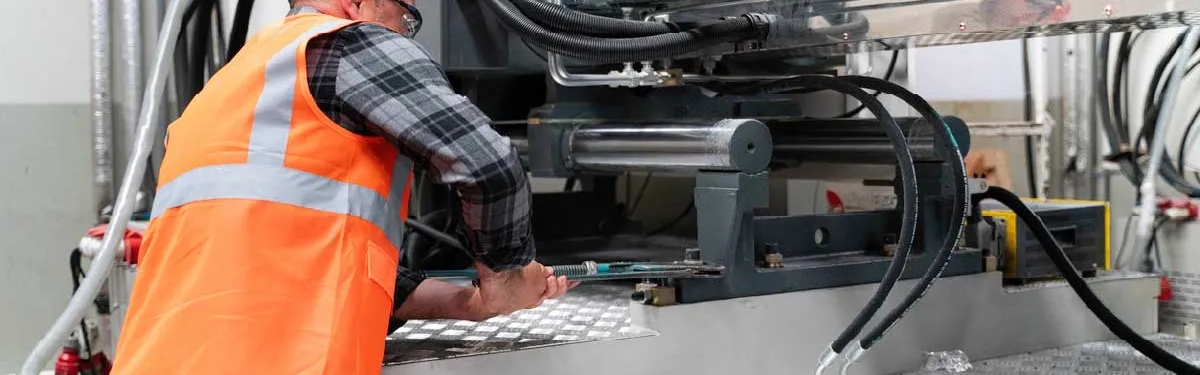
- Set up, operate, or tend metal or plastic molding, casting, or coremaking machines to mold or cast metal or thermoplastic parts or products.
- Turn valves and dials of machines to regulate pressure, temperature, and speed and feed rates, and to set cycle times.
- Read specifications, blueprints, and work orders to determine setups, temperatures, and time settings required to mold, form, or cast plastic materials, as well as to plan production sequences.
- Observe meters and gauges to verify and record temperatures, pressures, and press-cycle times.
- Connect water hoses to cooling systems of dies, using hand tools.
- Remove parts, such as dies, from machines after production runs are finished.
- Perform maintenance work such as cleaning and oiling machines.
- Smooth and clean inner surfaces of molds, using brushes, scrapers, air hoses, or grinding wheels, and fill imperfections with refractory material.
- Operate hoists to position dies or patterns on foundry floors.
- Cool products after processing to prevent distortion.
- Install dies onto machines or presses and coat dies with parting agents, according to work order specifications.
- Unload finished products from conveyor belts, pack them in containers, and place containers in warehouses.
- Remove finished or cured products from dies or molds, using hand tools, air hoses, and other equipment, stamping identifying information on products when necessary.
- Obtain and move specified patterns to work stations, manually or using hoists, and secure patterns to machines, using wrenches.
- Select and install blades, tools, or other attachments for each operation.
- Repair or replace damaged molds, pipes, belts, chains, or other equipment, using hand tools, hand-powered presses, or jib cranes.
- Inventory and record quantities of materials and finished products, requisitioning additional supplies as necessary.
- Select coolants and lubricants, and start their flow.
- Adjust equipment and workpiece holding fixtures, such as mold frames, tubs, and cutting tables, to ensure proper functioning.
- Maintain inventories of materials.
- Position and secure workpieces on machines, and start feeding mechanisms.
- Trim excess material from parts, using knives, and grind scrap plastic into powder for reuse.
- Mix and measure compounds, or weigh premixed compounds, and dump them into machine tubs, cavities, or molds.
- Spray, smoke, or coat molds with compounds to lubricate or insulate molds, using acetylene torches or sprayers.
- Preheat tools, dies, plastic materials, or patterns, using blowtorches or other equipment.
- Pour or load metal or sand into melting pots, furnaces, molds, or hoppers, using shovels, ladles, or machines.
- Skim or pour dross, slag, or impurities from molten metal, using ladles, rakes, hoes, spatulas, or spoons.
Work Styles
Achievement/Effort
Job requires establishing and maintaining personally challenging achievement goals and exerting effort toward mastering tasks.
Persistence
Initiative
Leadership
Cooperation
Concern for Others
Social Orientation
Self-Control
Stress Tolerance
Adaptability/Flexibility
Dependability
Attention to Detail
Integrity
Independence
Innovation
Analytical Thinking
Data Source: This page includes information from the O*NET 30.0 Database by the U.S. Department of Labor, Employment and Training Administration (USDOL/ETA). Used under the CC BY 4.0 license. O*NET® is a trademark of USDOL/ETA. This page includes Employment Projections program, Occupational Employment and Wage Statistics program, U.S. Bureau of Labor Statistics.