Colleges by Location
Colleges by Fields of Study
Colleges by Tuition Range
Colleges by GPA Range
College by SAT Range
Colleges by ACT Score
Graduate Schools by Location
Graduate Schools by Fields of Study
Graduate School by Degree Type
Paying for Graduate School
Online Graduate Programs
Test Preparation
Career Planning
College Planning
Graduate School Planning
Applying to Graduate School
- More

| Median Wage (USD, 2024) | Projected Job Openings (2023-2033) | Projected Growth (2023-2033) | |
|---|---|---|---|
| National Statistics | $45,760 | 2400 | 4.6% |
| State Statistics | - | - | - |
| City Statistics | - | - | - |
Experience Requirements Overview
- Job Zone Two: Some Preparation Needed
- Some previous work-related skill, knowledge, or experience is usually needed. For example, a teller would benefit from experience working directly with the public.
- These occupations usually require a high school diploma.
- Employees in these occupations need anywhere from a few months to one year of working with experienced employees. A recognized apprenticeship program may be associated with these occupations.
Education, Training and Experience
Required Level of Education: High School Diploma - or the equivalent (for example, GED)
Related Work Experience: N.A.
On-Site or In-Plant Training: Up to and including 1 month
On-the-Job Training: Anything beyond short demonstration, up to and including 1 month
Detailed Work Activities
- Smooth surfaces of objects or equipment.
- Place materials into molds.
- Select production input materials.
- Place materials into molds.
- Mix substances to create chemical solutions.
Work Values
Achievement
Occupations that satisfy this work value are results oriented and allow employees to use their strongest abilities, giving them a feeling of accomplishment. Corresponding needs are Ability Utilization and Achievement.
Working Conditions
Recognition
Relationships
Support
Independence
Tasks
- Release air bubbles and smooth seams, using rollers.
- Spray chopped fiberglass, resins, and catalysts onto prepared molds or dies using pneumatic spray guns with chopper attachments.
- Mix catalysts into resins, and saturate cloth and mats with mixtures, using brushes.
- Check completed products for conformance to specifications and for defects by measuring with rulers or micrometers, by checking them visually, or by tapping them to detect bubbles or dead spots.
- Pat or press layers of saturated mat or cloth into place on molds, using brushes or hands, and smooth out wrinkles and air bubbles with hands or squeegees.
- Select precut fiberglass mats, cloth, and wood-bracing materials as required by projects being assembled.
- Bond wood reinforcing strips to decks and cabin structures of watercraft, using resin-saturated fiberglass.
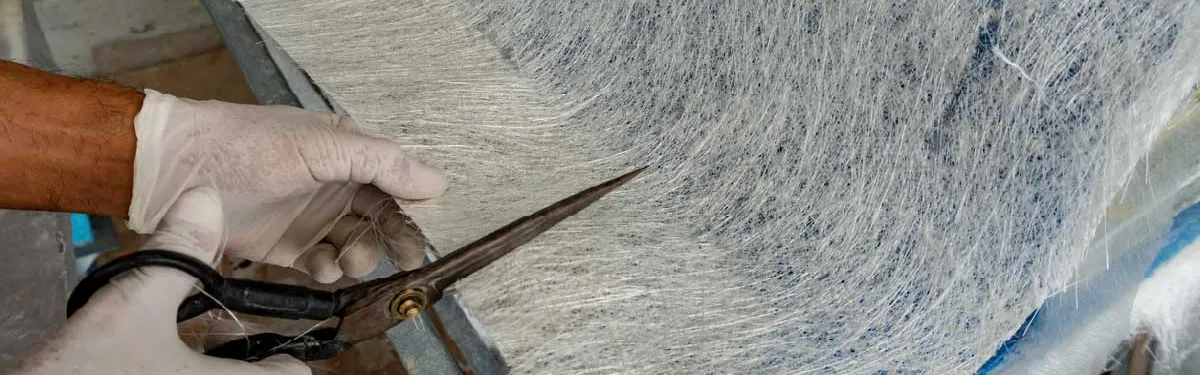
- Trim excess materials from molds, using hand shears or trimming knives.
- Apply layers of plastic resin to mold surfaces prior to placement of fiberglass mats, repeating layers until products have the desired thicknesses and plastics have jelled.
- Inspect, clean, and assemble molds before beginning work.
- Cure materials by letting them set at room temperature, placing them under heat lamps, or baking them in ovens.
- Apply lacquers and waxes to mold surfaces to facilitate assembly and removal of laminated parts.
- Repair or modify damaged or defective glass-fiber parts, checking thicknesses, densities, and contours to ensure a close fit after repair.
- Mask off mold areas not to be laminated, using cellophane, wax paper, masking tape, or special sprays containing mold-release substances.
- Check all dies, templates, and cutout patterns to be used in the manufacturing process to ensure that they conform to dimensional data, photographs, blueprints, samples, or customer specifications.
- Trim cured materials by sawing them with diamond-impregnated cutoff wheels.
Work Styles
Social Orientation
Job requires preferring to work with others rather than alone, and being personally connected with others on the job.
Achievement/Effort
Persistence
Initiative
Leadership
Cooperation
Concern for Others
Self-Control
Stress Tolerance
Adaptability/Flexibility
Dependability
Attention to Detail
Integrity
Independence
Innovation
Analytical Thinking
Data Source: This page includes information from the O*NET 30.0 Database by the U.S. Department of Labor, Employment and Training Administration (USDOL/ETA). Used under the CC BY 4.0 license. O*NET® is a trademark of USDOL/ETA. This page includes Employment Projections program, Occupational Employment and Wage Statistics program, U.S. Bureau of Labor Statistics.