Colleges by Location
Colleges by Fields of Study
Colleges by Tuition Range
Colleges by GPA Range
College by SAT Range
Colleges by ACT Score
Graduate Schools by Location
Graduate Schools by Fields of Study
Graduate School by Degree Type
Paying for Graduate School
Online Graduate Programs
Test Preparation
Career Planning
College Planning
Graduate School Planning
Applying to Graduate School
- More

| Median Wage (USD, 2024) | Projected Job Openings (2023-2033) | Projected Growth (2023-2033) | |
|---|---|---|---|
| National Statistics | $45,700 | 5200 | -2.7% |
| State Statistics | - | - | - |
| City Statistics | - | - | - |
Experience Requirements Overview
- Job Zone Two: Some Preparation Needed
- Some previous work-related skill, knowledge, or experience is usually needed. For example, a teller would benefit from experience working directly with the public.
- These occupations usually require a high school diploma.
- Employees in these occupations need anywhere from a few months to one year of working with experienced employees. A recognized apprenticeship program may be associated with these occupations.
Education, Training and Experience
Required Level of Education: High School Diploma - or the equivalent (for example, GED)
Related Work Experience: N.A.
On-Site or In-Plant Training: Up to and including 1 month
On-the-Job Training: Over 1 month, up to and including 3 months
Detailed Work Activities
- Operate cutting equipment.
- Weigh finished products.
- Measure dimensions of completed products or workpieces to verify conformance to specifications.
- Operate cutting equipment.
- Sort materials or products for processing, storing, shipping, or grading.
Work Values
Achievement
Occupations that satisfy this work value are results oriented and allow employees to use their strongest abilities, giving them a feeling of accomplishment. Corresponding needs are Ability Utilization and Achievement.
Working Conditions
Recognition
Relationships
Support
Independence
Tasks
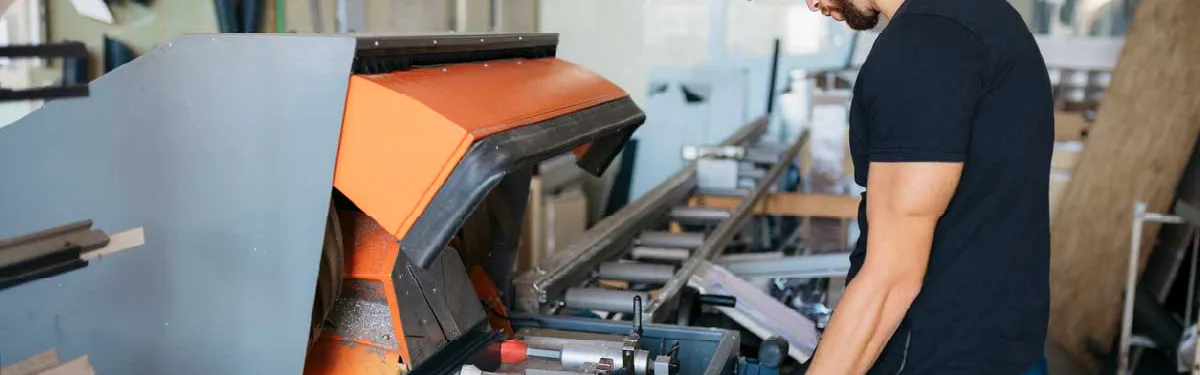
- Set up, operate, or tend machines that cut or slice materials, such as glass, stone, cork, rubber, tobacco, food, paper, or insulating material.
- Review work orders, blueprints, specifications, or job samples to determine components, settings, and adjustments for cutting and slicing machines.
- Examine, measure, and weigh materials or products to verify conformance to specifications, using measuring devices, such as rulers, micrometers, or scales.
- Press buttons, pull levers, or depress pedals to start and operate cutting and slicing machines.
- Start machines to verify setups, and make any necessary adjustments.
- Feed stock into cutting machines, onto conveyors, or under cutting blades, by threading, guiding, pushing, or turning handwheels.
- Monitor operation of cutting or slicing machines to detect malfunctions or to determine whether supplies need replenishment.
- Stack and sort cut material for packaging, further processing, or shipping, according to types and sizes of material.
- Adjust machine controls to alter position, alignment, speed, or pressure.
- Remove completed materials or products from cutting or slicing machines, and stack or store them for additional processing.
- Maintain production records, such as quantities, types, and dimensions of materials produced.
- Remove defective or substandard materials from machines, and readjust machine components so that products meet standards.
- Position stock along cutting lines, or against stops on beds of scoring or cutting machines.
- Move stock or scrap to and from machines manually, or by using carts, handtrucks, or lift trucks.
- Select and install machine components, such as cutting blades, rollers, and templates, according to specifications, using hand tools.
- Clean and lubricate cutting machines, conveyors, blades, saws, or knives, using steam hoses, scrapers, brushes, or oil cans.
- Mark cutting lines or identifying information on stock, using marking pencils, rulers, or scribes.
- Type instructions on computer keyboards, push buttons to activate computer programs, or manually set cutting guides, clamps, and knives.
- Change or replace saw blades, cables, cutter heads, and grinding wheels, using hand tools.
- Position width gauge blocks between blades, and level blades and insert wedges into frames to secure blades to frames.
- Direct workers on cutting teams.
- Sharpen cutting blades, knives, or saws, using files, bench grinders, or honing stones.
- Turn cranks or press buttons to activate winches that move cars under sawing cables or saw frames.
- Tighten pulleys or add abrasives to maintain cutting speeds.
- Cut stock manually to prepare for machine cutting, using tools such as knives, cleavers, handsaws, or hammers and chisels.
Work Styles
Achievement/Effort
Job requires establishing and maintaining personally challenging achievement goals and exerting effort toward mastering tasks.
Persistence
Initiative
Leadership
Cooperation
Concern for Others
Social Orientation
Self-Control
Stress Tolerance
Adaptability/Flexibility
Dependability
Attention to Detail
Integrity
Independence
Innovation
Analytical Thinking
Data Source: This page includes information from the O*NET 30.0 Database by the U.S. Department of Labor, Employment and Training Administration (USDOL/ETA). Used under the CC BY 4.0 license. O*NET® is a trademark of USDOL/ETA. This page includes Employment Projections program, Occupational Employment and Wage Statistics program, U.S. Bureau of Labor Statistics.