Colleges by Location
Colleges by Fields of Study
Colleges by Tuition Range
Colleges by GPA Range
College by SAT Range
Colleges by ACT Score
Graduate Schools by Location
Graduate Schools by Fields of Study
Graduate School by Degree Type
Paying for Graduate School
Online Graduate Programs
Test Preparation
Career Planning
College Planning
Graduate School Planning
Applying to Graduate School
- More
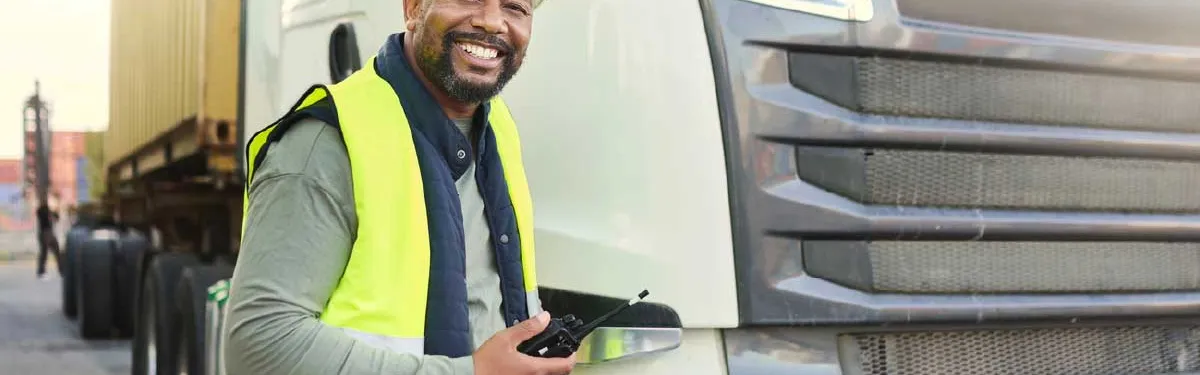

| Median Wage (USD, 2025) | Projected Job Openings (2025-2035) | Projected Growth (2025-2035) | |
|---|---|---|---|
| National Statistics | $92100 | 2500 | 1.6% |
| State Statistics | - | - | - |
| City Statistics | - | - | - |
Experience Requirements Overview
- Job Zone 1-2: Very Little to Some Preparation Needed
- Some occupations may need little or no previous experience; others require several months to a year of experience. For example, landscaping and groundskeeping workers might require very little training or previous experience, while agricultural equipment operators can benefit from on-the job training.
- Usually requires a high school diploma or GED, though some occupations may not.
- Ranges from a few days to one year of on-the-job training.
Education, Training and Experience
Required Level of Education: High School Diploma or the equivalent (such as a GED)
Related Work Experience: Over 1 year, up to and including 2 years
On-Site or In-Plant Training: Up to and including 1 month
On-the-Job Training: Anything beyond short demonstration, up to and including 1 month
Detailed Work Activities
- Inspect motor vehicles.
- Prepare accident or incident reports.
- Recommend changes or corrective procedures.
- Investigate transportation incidents, violations, or complaints.
- Review documents or materials for compliance with policies or regulations.
Work Values
Achievement
Occupations that satisfy this work value are results oriented and allow employees to use their strongest abilities, giving them a feeling of accomplishment. Corresponding needs are Ability Utilization and Achievement.
Working Conditions
Recognition
Relationships
Support
Independence
Tasks
- Inspect repairs to transportation vehicles or equipment to ensure that repair work was performed properly.
- Inspect vehicles or equipment to ensure compliance with rules, standards, or regulations.
- Investigate complaints regarding safety violations.
- Inspect vehicles or other equipment for evidence of abuse, damage, or mechanical malfunction.
- Issue notices and recommend corrective actions when infractions or problems are found.
- Conduct vehicle or transportation equipment tests, using diagnostic equipment.
- Conduct remote inspections of motor vehicles, using handheld controllers and remotely directed vehicle inspection devices.
- Attach onboard diagnostics (OBD) scanner cables to vehicles to conduct emissions inspections.
- Investigate incidents or violations, such as delays, accidents, and equipment failures.
- Prepare reports on investigations or inspections and actions taken.
- Examine carrier operating rules, employee qualification guidelines, or carrier training and testing programs for compliance with regulations or safety standards.
- Conduct visual inspections of emission control equipment and smoke emitted from gasoline or diesel vehicles.
- Negotiate with authorities, such as local government officials, to eliminate hazards along transportation routes.
- Identify modifications to engines, fuel systems, emissions control equipment, or other vehicle systems to determine the impact of modifications on inspection procedures or conclusions.
- Review commercial vehicle logs, shipping papers, or driver and equipment records to detect any problems or to ensure compliance with regulations.
- Identify emissions testing procedures and standards appropriate for the age and technology of vehicles.
- Compare emissions findings with applicable emissions standards.
- Investigate and make recommendations on carrier requests for waiver of federal standards.
- Perform low-pressure fuel evaluative tests (LPFET) to test for harmful emissions from vehicles without onboard diagnostics (OBD) equipment.
- Evaluate new methods of packaging, testing, shipping, or transporting hazardous materials to ensure adequate public safety protection.
Work Styles
Innovation
A tendency to be inventive, to be imaginative, and to adopt new perspectives on ways to accomplish work.
Achievement Orientation
Intellectual Curiosity
Tolerance for Ambiguity
Initiative
Adaptability
Self-Confidence
Perseverance
Leadership Orientation
Humility
Sincerity
Empathy
Cooperation
Optimism
Social Orientation
Cautiousness
Attention to Detail
Dependability
Integrity
Stress Tolerance
Self-Control
Data Source: This page includes information from the O*NET 31.0 Database by the U.S. Department of Labor, Employment and Training Administration (USDOL/ETA). Used under the CC BY 4.0 license. O*NET® is a trademark of USDOL/ETA. This page includes Employment Projections program, Occupational Employment and Wage Statistics program, U.S. Bureau of Labor Statistics.