Colleges by Location
Colleges by Fields of Study
Colleges by Tuition Range
Colleges by GPA Range
College by SAT Range
Colleges by ACT Score
Graduate Schools by Location
Graduate Schools by Fields of Study
Graduate School by Degree Type
Paying for Graduate School
Online Graduate Programs
Test Preparation
Career Planning
College Planning
Graduate School Planning
Applying to Graduate School
- More

| Median Wage (USD, 2024) | Projected Job Openings (2023-2033) | Projected Growth (2023-2033) | |
|---|---|---|---|
| National Statistics | $41,230 | 2800 | -0.9% |
| State Statistics | - | - | - |
| City Statistics | - | - | - |
Experience Requirements Overview
- Job Zone One: Little or No Preparation Needed
- Little or no previous work-related skill, knowledge, or experience is needed for these occupations. For example, a person can become a waiter or waitress even if he/she has never worked before.
- Some of these occupations may require a high school diploma or GED certificate.
- Employees in these occupations need anywhere from a few days to a few months of training. Usually, an experienced worker could show you how to do the job.
Education, Training and Experience
Related Work Experience: N.A.
Required Level of Education: Less than a High School Diploma
On-Site or In-Plant Training: Over 3 months, up to and including 6 months
On-the-Job Training: Over 3 months, up to and including 6 months
Detailed Work Activities
- Position material handling equipment.
- Measure product or material dimensions.
- Weigh materials to ensure compliance with specifications.
- Control pumps or pumping equipment.
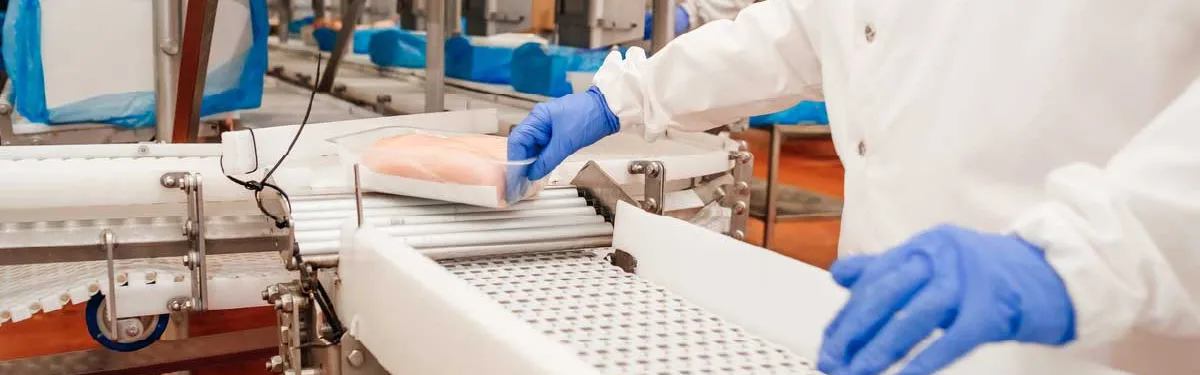
- Operate conveyors or other industrial material moving equipment.
Work Values
Achievement
Occupations that satisfy this work value are results oriented and allow employees to use their strongest abilities, giving them a feeling of accomplishment. Corresponding needs are Ability Utilization and Achievement.
Working Conditions
Recognition
Relationships
Support
Independence
Tasks
- Inform supervisors of equipment malfunctions that need to be addressed.
- Observe conveyor operations and monitor lights, dials, and gauges to maintain specified operating levels and to detect equipment malfunctions.
- Record production data such as weights, types, quantities, and storage locations of materials, as well as equipment performance problems and downtime.
- Load, unload, or adjust materials or products on conveyors by hand, by using lifts, hoists, and scoops, or by opening gates, chutes, or hoppers.
- Stop equipment or machinery and clear jams, using poles, bars, and hand tools, or remove damaged materials from conveyors.
- Distribute materials, supplies, and equipment to work stations, using lifts and trucks.
- Observe packages moving along conveyors to identify packages, detect defective packaging, and perform quality control.
- Collect samples of materials or products, checking them to ensure conformance to specifications or sending them to laboratories for analysis.
- Position deflector bars, gates, chutes, or spouts to divert flow of materials from one conveyor onto another conveyor.
- Repair or replace equipment components or parts such as blades, rolls, and pumps.
- Manipulate controls, levers, and valves to start pumps, auxiliary equipment, or conveyors, and to adjust equipment positions, speeds, timing, and material flows.
- Weigh or measure materials and products, using scales or other measuring instruments, or read scales on conveyors that continually weigh products, to verify specified tonnages and prevent overloads.
- Read production and delivery schedules, and confer with supervisors, to determine sorting and transfer procedures, arrangement of packages on pallets, and destinations of loaded pallets.
- Press console buttons to deflect packages to predetermined accumulators or reject lines.
- Clean, sterilize, and maintain equipment, machinery, and work stations, using hand tools, shovels, brooms, chemicals, hoses, and lubricants.
- Affix identifying information to materials or products, using hand tools.
- Move, assemble, and connect hoses or nozzles to material hoppers, storage tanks, conveyor sections or chutes, and pumps.
- Thread strapping through strapping tools and secure battens with strapping to form protective pallets around extrusions.
- Contact workers in work stations or other departments to request movement of materials, products, or machinery, or to notify them of incoming shipments and their estimated delivery times.
- Join sections of conveyor frames at temporary working areas, and connect power units.
Work Styles
Achievement/Effort
Job requires establishing and maintaining personally challenging achievement goals and exerting effort toward mastering tasks.
Persistence
Initiative
Leadership
Cooperation
Concern for Others
Social Orientation
Self-Control
Stress Tolerance
Adaptability/Flexibility
Dependability
Attention to Detail
Integrity
Independence
Innovation
Analytical Thinking
Data Source: This page includes information from the O*NET 30.0 Database by the U.S. Department of Labor, Employment and Training Administration (USDOL/ETA). Used under the CC BY 4.0 license. O*NET® is a trademark of USDOL/ETA. This page includes Employment Projections program, Occupational Employment and Wage Statistics program, U.S. Bureau of Labor Statistics.