Colleges by Location
Colleges by Fields of Study
Colleges by Tuition Range
Colleges by GPA Range
College by SAT Range
Colleges by ACT Score
Graduate Schools by Location
Graduate Schools by Fields of Study
Graduate School by Degree Type
Paying for Graduate School
Online Graduate Programs
Test Preparation
Career Planning
College Planning
Graduate School Planning
Applying to Graduate School
- More

| Median Wage (USD, 2024) | Projected Job Openings (2023-2033) | Projected Growth (2023-2033) | |
|---|---|---|---|
| National Statistics | $58,490 | 400 | 0.5% |
| State Statistics | - | - | - |
| City Statistics | - | - | - |
Experience Requirements Overview
- Job Zone Two: Some Preparation Needed
- Some previous work-related skill, knowledge, or experience is usually needed. For example, a teller would benefit from experience working directly with the public.
- These occupations usually require a high school diploma.
- Employees in these occupations need anywhere from a few months to one year of working with experienced employees. A recognized apprenticeship program may be associated with these occupations.
Education, Training and Experience
Required Level of Education: High School Diploma - or the equivalent (for example, GED)
Related Work Experience: N.A.
On-Site or In-Plant Training: Over 1 month, up to and including 3 months
On-the-Job Training: Over 6 months, up to and including 1 year
Detailed Work Activities
- Control equipment that regulates vehicle traffic.
- Record operational details of travel.
- Control equipment that regulates vehicle traffic.
- Direct vehicle traffic.
- Prepare accident or incident reports.
Work Values
Achievement
Occupations that satisfy this work value are results oriented and allow employees to use their strongest abilities, giving them a feeling of accomplishment. Corresponding needs are Ability Utilization and Achievement.
Working Conditions
Recognition
Relationships
Support
Independence
Tasks
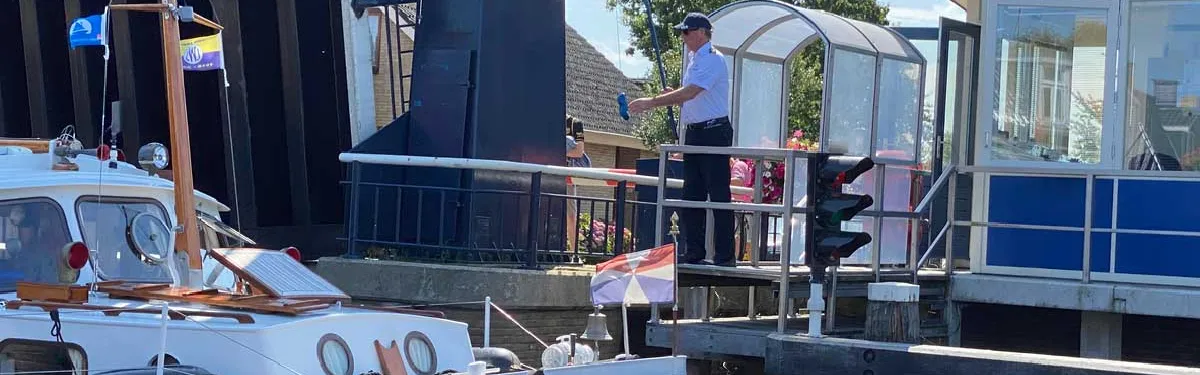
- Control machinery to open and close canal locks and dams, railroad or highway drawbridges, or horizontally or vertically adjustable bridges.
- Direct movements of vessels in locks or bridge areas, using signals, telecommunication equipment, or loudspeakers.
- Observe position and progress of vessels to ensure best use of lock spaces or bridge opening spaces.
- Record names, types, and destinations of vessels passing through bridge openings or locks, and numbers of trains or vehicles crossing bridges.
- Observe approaching vessels to determine size and speed, and listen for whistle signals indicating desire to pass.
- Move levers to activate traffic signals, navigation lights, and alarms.
- Write and submit maintenance work requisitions.
- Log data, such as water levels and weather conditions.
- Prepare accident reports.
- Perform maintenance duties, such as sweeping, painting, and yard work to keep facilities clean and in order.
- Turn valves to increase or decrease water levels in locks.
- Check that bridges are clear of vehicles and pedestrians prior to opening.
- Stop automobile and pedestrian traffic on bridges, and lower automobile gates prior to moving bridges.
- Raise drawbridges and observe passage of water traffic or lower drawbridges and raise automobile gates.
- Maintain and guard stations in bridges to check waterways for boat traffic.
- Clean and lubricate equipment, and make minor repairs and adjustments.
- Inspect canal and bridge equipment, and areas, such as roadbeds, for damage or defects, reporting problems to supervisors as necessary.
- Attach ropes or cable lines to bitts on lock decks or wharfs to secure vessels.
Work Styles
Achievement/Effort
Job requires establishing and maintaining personally challenging achievement goals and exerting effort toward mastering tasks.
Persistence
Initiative
Leadership
Cooperation
Concern for Others
Social Orientation
Self-Control
Stress Tolerance
Adaptability/Flexibility
Dependability
Attention to Detail
Integrity
Independence
Innovation
Analytical Thinking
Data Source: This page includes information from the O*NET 30.0 Database by the U.S. Department of Labor, Employment and Training Administration (USDOL/ETA). Used under the CC BY 4.0 license. O*NET® is a trademark of USDOL/ETA. This page includes Employment Projections program, Occupational Employment and Wage Statistics program, U.S. Bureau of Labor Statistics.