Colleges by Location
Colleges by Fields of Study
Colleges by Tuition Range
Colleges by GPA Range
College by SAT Range
Colleges by ACT Score
Graduate Schools by Location
Graduate Schools by Fields of Study
Graduate School by Degree Type
Paying for Graduate School
Online Graduate Programs
Test Preparation
Career Planning
College Planning
Graduate School Planning
Applying to Graduate School
- More

| Median Wage (USD, 2024) | Projected Job Openings (2023-2033) | Projected Growth (2023-2033) | |
|---|---|---|---|
| National Statistics | $93,580 | 8500 | 2.3% |
| State Statistics | - | - | - |
| City Statistics | - | - | - |
Experience Requirements Overview
- Job Zone Four: Considerable Preparation Needed
- A considerable amount of work-related skill, knowledge, or experience is needed for these occupations. For example, an accountant must complete four years of college and work for several years in accounting to be considered qualified.
- Most of these occupations require a four-year bachelor's degree, but some do not.
- Employees in these occupations usually need several years of work-related experience, on-the-job training, and/or vocational training.
Education, Training and Experience
Required Level of Education: Bachelor's Degree
Related Work Experience: Over 2 years, up to and including 4 years
On-Site or In-Plant Training: Over 6 months, up to and including 1 year
On-the-Job Training: Over 6 months, up to and including 1 year
Detailed Work Activities
- Examine records or other types of data to investigate criminal activities.
- Investigate illegal or suspicious activities.
- Use databases to locate investigation details or other information.
- Record information about suspects or criminals.
- Examine records or other types of data to investigate criminal activities.
Work Values
Achievement
Occupations that satisfy this work value are results oriented and allow employees to use their strongest abilities, giving them a feeling of accomplishment. Corresponding needs are Ability Utilization and Achievement.
Working Conditions
Recognition
Relationships
Support
Independence
Tasks
- Validate known intelligence with data from other sources.
- Gather, analyze, correlate, or evaluate information from a variety of resources, such as law enforcement databases.
- Evaluate records of communications, such as telephone calls, to plot activity and determine the size and location of criminal groups and members.
- Gather intelligence information by field observation, confidential information sources, or public records.
- Analyze intelligence data to identify patterns and trends in criminal activity.
- Prepare comprehensive written reports, presentations, maps, or charts, based on research, collection, and analysis of intelligence data.
- Collaborate with representatives from other government and intelligence organizations to share information or coordinate intelligence activities.
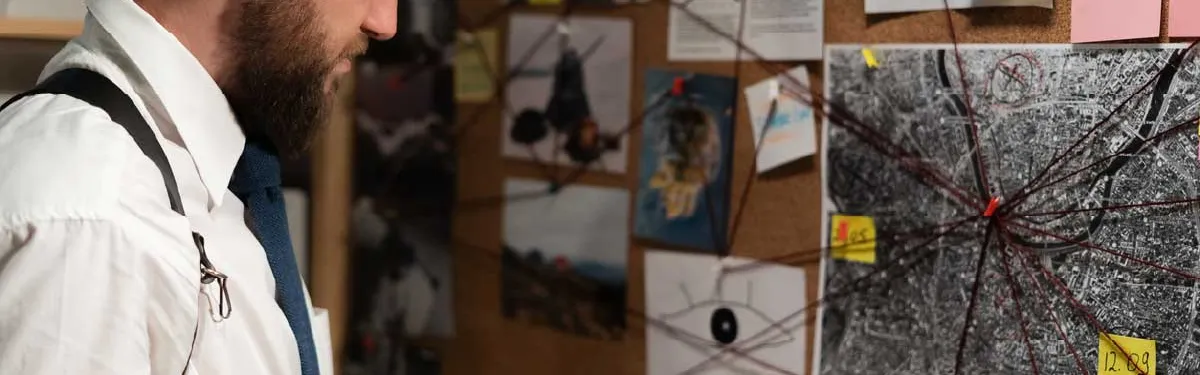
- Link or chart suspects to criminal organizations or events to determine activities and interrelationships.
- Establish criminal profiles to aid in connecting criminal organizations with their members.
- Identify gaps in information.
- Design, use, or maintain databases and software applications, such as geographic information systems (GIS) mapping and artificial intelligence tools.
- Predict future gang, organized crime, or terrorist activity, using analyses of intelligence data.
- Study activities relating to narcotics, money laundering, gangs, auto theft rings, terrorism, or other national security threats.
- Study the assets of criminal suspects to determine the flow of money from or to targeted groups.
- Conduct presentations of analytic findings.
- Develop defense plans or tactics, using intelligence and other information.
- Interview, interrogate, or interact with witnesses or crime suspects to collect human intelligence.
- Prepare plans to intercept foreign communications transmissions.
- Study communication code languages or foreign languages to translate intelligence.
- Gather and evaluate information, using tools such as aerial photographs, radar equipment, or sensitive radio equipment.
- Operate cameras, radios, or other surveillance equipment to intercept communications or document activities.
Work Styles
Achievement/Effort
Job requires establishing and maintaining personally challenging achievement goals and exerting effort toward mastering tasks.
Persistence
Initiative
Leadership
Cooperation
Concern for Others
Social Orientation
Self-Control
Stress Tolerance
Adaptability/Flexibility
Dependability
Attention to Detail
Integrity
Independence
Innovation
Analytical Thinking
Data Source: This page includes information from the O*NET 30.0 Database by the U.S. Department of Labor, Employment and Training Administration (USDOL/ETA). Used under the CC BY 4.0 license. O*NET® is a trademark of USDOL/ETA. This page includes Employment Projections program, Occupational Employment and Wage Statistics program, U.S. Bureau of Labor Statistics.