Colleges by Location
Colleges by Fields of Study
Colleges by Tuition Range
Colleges by GPA Range
College by SAT Range
Colleges by ACT Score
Graduate Schools by Location
Graduate Schools by Fields of Study
Graduate School by Degree Type
Paying for Graduate School
Online Graduate Programs
Test Preparation
Career Planning
College Planning
Graduate School Planning
Applying to Graduate School
- More

| Median Wage (USD, 2024) | Projected Job Openings (2023-2033) | Projected Growth (2023-2033) | |
|---|---|---|---|
| National Statistics | $59,530 | 25700 | 4.2% |
| State Statistics | - | - | - |
| City Statistics | - | - | - |
Experience Requirements Overview
- Job Zone Three: Medium Preparation Needed
- Previous work-related skill, knowledge, or experience is required for these occupations. For example, an electrician must have completed three or four years of apprenticeship or several years of vocational training, and often must have passed a licensing exam, in order to perform the job.
- Most occupations in this zone require training in vocational schools, related on-the-job experience, or an associate's degree.
- Employees in these occupations usually need one or two years of training involving both on-the-job experience and informal training with experienced workers. A recognized apprenticeship program may be associated with these occupations.
Education, Training and Experience
Required Level of Education: High School Diploma - or the equivalent (for example, GED)
Related Work Experience: N.A.
On-Site or In-Plant Training: Over 3 months, up to and including 6 months
On-the-Job Training: Over 6 months, up to and including 1 year
Detailed Work Activities
- Rescue people from hazardous situations.
- Select tools, equipment, or technologies for use in operations or projects.
- Assess characteristics of fires.
- Relay information about incidents or emergencies to personnel using phones or two-way radios.
- Locate fires or fire danger areas.
Work Values
Achievement
Occupations that satisfy this work value are results oriented and allow employees to use their strongest abilities, giving them a feeling of accomplishment. Corresponding needs are Ability Utilization and Achievement.
Working Conditions
Recognition
Relationships
Support
Independence
Tasks
- Collaborate with police to respond to accidents, disasters, and arson investigation calls.
- Rescue survivors from burning buildings, accident sites, and water hazards.
- Dress with equipment such as fire-resistant clothing and breathing apparatus.
- Assess fires and situations and report conditions to superiors to receive instructions, using two-way radios.
- Move toward the source of a fire, using knowledge of types of fires, construction design, building materials, and physical layout of properties.
- Respond to fire alarms and other calls for assistance, such as automobile and industrial accidents.
- Create openings in buildings for ventilation or entrance, using axes, chisels, crowbars, electric saws, or core cutters.
- Drive and operate fire fighting vehicles and equipment.
- Inspect fire sites after flames have been extinguished to ensure that there is no further danger.
- Position and climb ladders to gain access to upper levels of buildings, or to rescue individuals from burning structures.
- Select and attach hose nozzles, depending on fire type, and direct streams of water or chemicals onto fires.
- Operate pumps connected to high-pressure hoses.
- Maintain contact with fire dispatchers at all times to notify them of the need for additional firefighters and supplies, or to detail any difficulties encountered.
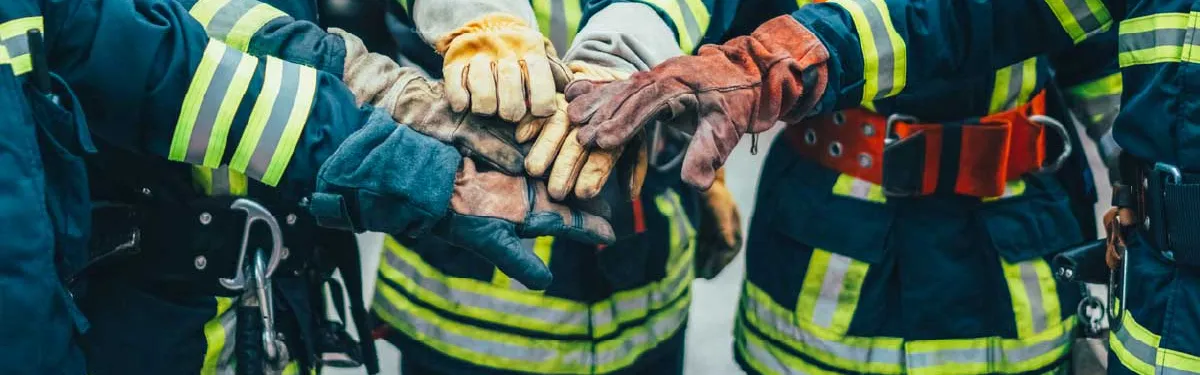
- Collaborate with other firefighters as a member of a firefighting crew.
- Patrol burned areas after fires to locate and eliminate hot spots that may restart fires.
- Participate in fire drills and demonstrations of fire fighting techniques.
- Prepare written reports that detail specifics of fire incidents.
- Maintain knowledge of current firefighting practices by participating in drills and by attending seminars, conventions, and conferences.
- Participate in physical training activities to maintain a high level of physical fitness.
- Protect property from water and smoke, using waterproof salvage covers, smoke ejectors, and deodorants.
- Inform and educate the public on fire prevention.
- Salvage property by removing broken glass, pumping out water, and ventilating buildings to remove smoke.
- Orient self in relation to fire, using compass and map, and collect supplies and equipment dropped by parachute.
- Clean and maintain fire stations and fire fighting equipment and apparatus.
- Inspect buildings for fire hazards and compliance with fire prevention ordinances, testing and checking smoke alarms and fire suppression equipment as necessary.
- Take action to contain any hazardous chemicals that could catch fire, leak, or spill.
- Extinguish flames and embers to suppress fires, using shovels or engine- or hand-driven water or chemical pumps.
- Administer first aid and cardiopulmonary resuscitation to injured persons or provide emergency medical care such as basic or advanced life support.
- Search to locate fire survivors.
- Train new employees to control and suppress fires.
Work Styles
Achievement/Effort
Job requires establishing and maintaining personally challenging achievement goals and exerting effort toward mastering tasks.
Persistence
Initiative
Leadership
Cooperation
Concern for Others
Social Orientation
Self-Control
Stress Tolerance
Adaptability/Flexibility
Dependability
Attention to Detail
Integrity
Independence
Innovation
Analytical Thinking
Data Source: This page includes information from the O*NET 30.0 Database by the U.S. Department of Labor, Employment and Training Administration (USDOL/ETA). Used under the CC BY 4.0 license. O*NET® is a trademark of USDOL/ETA. This page includes Employment Projections program, Occupational Employment and Wage Statistics program, U.S. Bureau of Labor Statistics.