Colleges by Location
Colleges by Fields of Study
Colleges by Tuition Range
Colleges by GPA Range
College by SAT Range
Colleges by ACT Score
Graduate Schools by Location
Graduate Schools by Fields of Study
Graduate School by Degree Type
Paying for Graduate School
Online Graduate Programs
Test Preparation
Career Planning
College Planning
Graduate School Planning
Applying to Graduate School
- More

| Median Wage (USD, 2024) | Projected Job Openings (2023-2033) | Projected Growth (2023-2033) | |
|---|---|---|---|
| National Statistics | $56,280 | 500 | 1.2% |
| State Statistics | - | - | - |
| City Statistics | - | - | - |
Experience Requirements Overview
- Job Zone Three: Medium Preparation Needed
- Previous work-related skill, knowledge, or experience is required for these occupations. For example, an electrician must have completed three or four years of apprenticeship or several years of vocational training, and often must have passed a licensing exam, in order to perform the job.
- Most occupations in this zone require training in vocational schools, related on-the-job experience, or an associate's degree.
- Employees in these occupations usually need one or two years of training involving both on-the-job experience and informal training with experienced workers. A recognized apprenticeship program may be associated with these occupations.
Education, Training and Experience
Required Level of Education: Associate's Degree (or other 2-year degree)
Related Work Experience: Over 1 year, up to and including 2 years
On-Site or In-Plant Training: Over 1 year, up to and including 2 years
On-the-Job Training: Over 1 year, up to and including 2 years
Detailed Work Activities
- Transport biological or other medical materials.
- Clean work areas.
- Clean facilities or equipment.
- Monitor operations to ensure compliance with safety or security policies or regulations.
- Apply makeup to alter or enhance appearance.
Work Values
Achievement
Occupations that satisfy this work value are results oriented and allow employees to use their strongest abilities, giving them a feeling of accomplishment. Corresponding needs are Ability Utilization and Achievement.
Working Conditions
Recognition
Relationships
Support
Independence
Tasks
- Conform to laws of health and sanitation and ensure that legal requirements concerning embalming are met.
- Apply cosmetics to impart lifelike appearance to the deceased.
- Join lips, using needles and thread or wire.
- Close incisions, using needles and sutures.
- Incise stomach and abdominal walls and probe internal organs, using trocar, to withdraw blood and waste matter from organs.
- Clean and disinfect areas in which bodies are prepared and embalmed.
- Dress bodies and place them in caskets.
- Make incisions in arms or thighs and drain blood from circulatory system and replace it with embalming fluid, using pump.
- Remove the deceased from place of death and transport to funeral home.
- Perform the duties of funeral directors, including coordinating funeral activities.
- Attach trocar to pump-tube, start pump, and repeat probing to force embalming fluid into organs.
- Reshape or reconstruct disfigured or maimed bodies when necessary, using dermasurgery techniques and materials such as clay, cotton, plaster of Paris, and wax.
- Pack body orifices with cotton saturated with embalming fluid to prevent escape of gases or waste matter.
- Conduct interviews to arrange for the preparation of obituary notices, to assist with the selection of caskets or urns, and to determine the location and time of burials or cremations.
- Insert convex celluloid or cotton between eyeballs and eyelids to prevent slipping and sinking of eyelids.
- Assist with placing caskets in hearses and organize cemetery processions.
- Maintain records, such as itemized lists of clothing or valuables delivered with body and names of persons embalmed.
- Wash and dry bodies, using germicidal soap and towels or hot air dryers.
- Arrange for transporting the deceased to another state for interment.
- Perform special procedures necessary for remains that are to be transported to other states or overseas, or where death was caused by infectious disease.
- Supervise funeral attendants and other funeral home staff.
- Serve as pallbearers, attend visiting rooms, and provide other assistance to the bereaved.
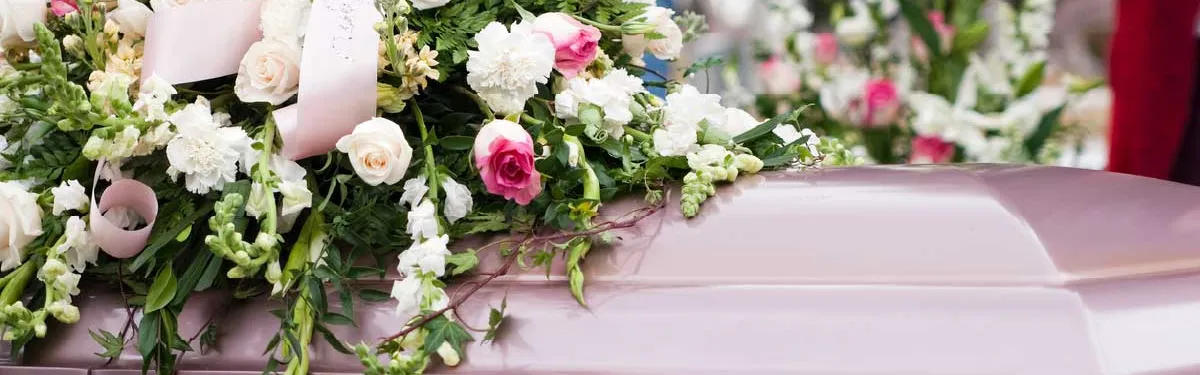
- Direct casket and floral display placement and arrange guest seating.
- Arrange funeral home equipment and perform general maintenance.
- Assist coroners at death scenes or at autopsies, file police reports, and testify at inquests or in court, if employed by a coroner.
- Press diaphragm to evacuate air from lungs.
Work Styles
Achievement/Effort
Job requires establishing and maintaining personally challenging achievement goals and exerting effort toward mastering tasks.
Persistence
Initiative
Leadership
Cooperation
Concern for Others
Social Orientation
Self-Control
Stress Tolerance
Adaptability/Flexibility
Dependability
Attention to Detail
Integrity
Independence
Innovation
Analytical Thinking
Data Source: This page includes information from the O*NET 30.0 Database by the U.S. Department of Labor, Employment and Training Administration (USDOL/ETA). Used under the CC BY 4.0 license. O*NET® is a trademark of USDOL/ETA. This page includes Employment Projections program, Occupational Employment and Wage Statistics program, U.S. Bureau of Labor Statistics.