Colleges by Location
Colleges by Fields of Study
Colleges by Tuition Range
Colleges by GPA Range
College by SAT Range
Colleges by ACT Score
Graduate Schools by Location
Graduate Schools by Fields of Study
Graduate School by Degree Type
Paying for Graduate School
Online Graduate Programs
Test Preparation
Career Planning
College Planning
Graduate School Planning
Applying to Graduate School
- More

| Median Wage (USD, 2024) | Projected Job Openings (2023-2033) | Projected Growth (2023-2033) | |
|---|---|---|---|
| National Statistics | $58,570 | 400 | 2.4% |
| State Statistics | - | - | - |
| City Statistics | - | - | - |
Table of Contents:
Experience Requirements Overview
- Job Zone Three: Medium Preparation Needed
- Previous work-related skill, knowledge, or experience is required for these occupations. For example, an electrician must have completed three or four years of apprenticeship or several years of vocational training, and often must have passed a licensing exam, in order to perform the job.
- Most occupations in this zone require training in vocational schools, related on-the-job experience, or an associate's degree.
- Employees in these occupations usually need one or two years of training involving both on-the-job experience and informal training with experienced workers. A recognized apprenticeship program may be associated with these occupations.
Detailed Work Activities
- Analyze environmental data.
- Advise others about environmental management or conservation.
- Apply knowledge or research findings to address environmental problems.
- Assist skilled construction or extraction personnel.
- Collect environmental data or samples.
Tasks
- Analyze ecological data about the impact of pollution, erosion, floods, and other environmental problems on bodies of water.
- Answer technical questions from hydrologists, policymakers, or other customers developing water conservation plans.
- Apply research findings to minimize the environmental impacts of pollution, waterborne diseases, erosion, or sedimentation.
- Assist in designing programs to ensure the proper sealing of abandoned wells.
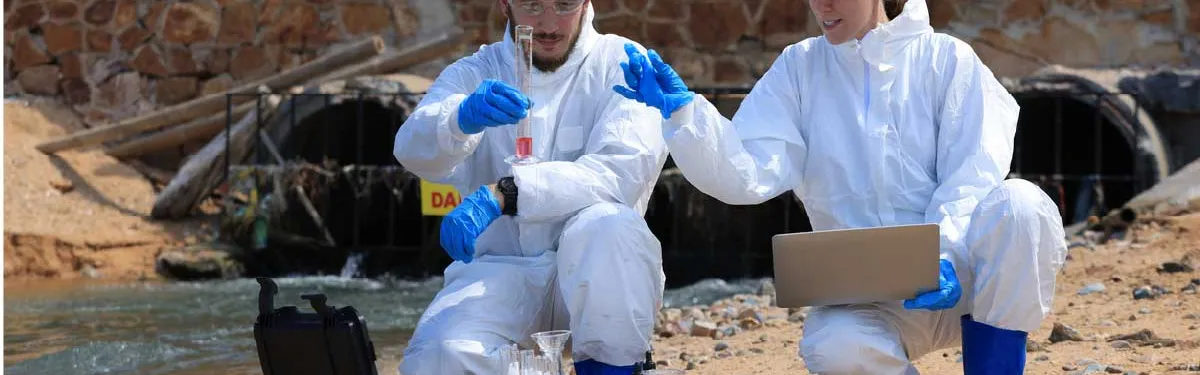
- Collect water and soil samples to test for physical, chemical, or biological properties, such as pH, oxygen level, temperature, and pollution.
- Develop computer models for hydrologic predictions.
- Estimate the costs and benefits of municipal projects, such as hydroelectric power plants, irrigation systems, and wastewater treatment facilities.
- Investigate complaints or conflicts related to the alteration of public waters by gathering information, recommending alternatives, or preparing legal documents.
- Investigate the properties, origins, or activities of glaciers, ice, snow, or permafrost.
- Locate and deliver information or data as requested by customers, such as contractors, government entities, and members of the public.
- Measure the properties of bodies of water, such as water levels, volume, and flow.
- Perform quality control checks on data to be used by hydrologists.
- Prepare, install, maintain, or repair equipment used for hydrologic study, such as water level recorders, stream flow gauges, and water analyzers.
- Provide real time data to emergency management and weather service personnel during flood events.
- Write groundwater contamination reports on known, suspected, or potential hazardous waste sites.
- Write materials for research publications, such as maps, tables, and reports, to disseminate findings.
Data Source: This page includes information from the O*NET 30.0 Database by the U.S. Department of Labor, Employment and Training Administration (USDOL/ETA). Used under the CC BY 4.0 license. O*NET® is a trademark of USDOL/ETA. This page includes Employment Projections program, Occupational Employment and Wage Statistics program, U.S. Bureau of Labor Statistics.