Colleges by Location
Colleges by Fields of Study
Colleges by Tuition Range
Colleges by GPA Range
College by SAT Range
Colleges by ACT Score
Graduate Schools by Location
Graduate Schools by Fields of Study
Graduate School by Degree Type
Paying for Graduate School
Online Graduate Programs
Test Preparation
Career Planning
College Planning
Graduate School Planning
Applying to Graduate School
- More
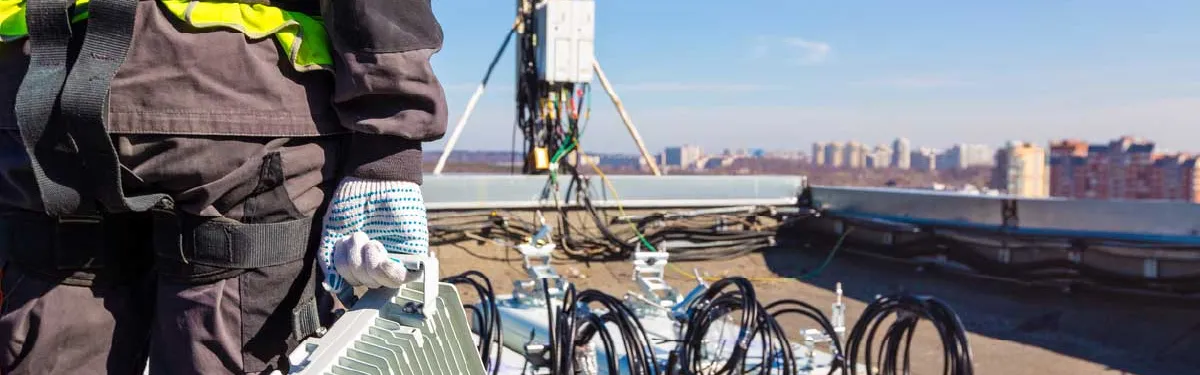

| Median Wage (USD, 2024) | Projected Job Openings (2023-2033) | Projected Growth (2023-2033) | |
|---|---|---|---|
| National Statistics | $64,190 | 1300 | 6.8% |
| State Statistics | - | - | - |
| City Statistics | - | - | - |
Experience Requirements Overview
- Job Zone Three: Medium Preparation Needed
- Previous work-related skill, knowledge, or experience is required for these occupations. For example, an electrician must have completed three or four years of apprenticeship or several years of vocational training, and often must have passed a licensing exam, in order to perform the job.
- Most occupations in this zone require training in vocational schools, related on-the-job experience, or an associate's degree.
- Employees in these occupations usually need one or two years of training involving both on-the-job experience and informal training with experienced workers. A recognized apprenticeship program may be associated with these occupations.
Education, Training and Experience
Required Level of Education: High School Diploma - or the equivalent (for example, GED)
Related Work Experience: Over 2 years, up to and including 4 years
On-Site or In-Plant Training: Over 6 months, up to and including 1 year
On-the-Job Training: Over 6 months, up to and including 1 year
Detailed Work Activities
- Bolt objects into place.
- Inspect telecommunications equipment to identify problems.
- Adjust equipment to ensure optimal performance.
- Climb equipment or structures to access work areas.
- Inspect completed work to ensure proper functioning.
Work Values
Achievement
Occupations that satisfy this work value are results oriented and allow employees to use their strongest abilities, giving them a feeling of accomplishment. Corresponding needs are Ability Utilization and Achievement.
Working Conditions
Recognition
Relationships
Support
Independence
Tasks
- Inspect completed work to ensure all hardware is tight, antennas are level, hangers are properly fastened, proper support is in place, or adequate weather proofing has been installed.
- Run appropriate power, ground, or coaxial cables.
- Test operation of tower transmission components, using sweep testing tools or software.
- Install all necessary transmission equipment components, including antennas or antenna mounts, surge arrestors, transmission lines, connectors, or tower-mounted amplifiers (TMAs).
- Read work orders, blueprints, plans, datasheets or site drawings to determine work to be done.
- Replace existing antennas with new antennas as directed.
- Bolt equipment into place, using hand or power tools.
- Install, connect, or test underground or aboveground grounding systems.
- Complete reports related to project status, progress, or other work details, using computer software.
- Check antenna positioning to ensure specified azimuths or mechanical tilts and adjust as necessary.
- Transport equipment to work sites, using utility trucks and equipment trailers.
- Take site survey photos or photos of work performed, using digital cameras.
- Climb towers to access components, using safety equipment, such as full-body harnesses.
- Climb communication towers to install, replace, or repair antennas or auxiliary equipment used to transmit and receive radio waves.
- Lift equipment into position, using cranes and rigging tools or equipment, such as gin poles.
- Perform maintenance or repair work on existing tower equipment, using hand or power tools.
- Locate tower sites where work is to be performed, using mapping software.
- Install or repair tower lighting components, including strobes, beacons, or lighting controllers.
- Calibrate and align components, using scales, gauges, and other measuring instruments.
- Examine malfunctioning radio equipment to locate defects such as loose connections, broken wires, or burned-out components, using schematic diagrams and test equipment.
- Insert plugs into receptacles and bolt or screw leads to terminals to connect equipment to power sources, using hand tools.
- Install, adjust, and repair stationary and mobile radio transmitting and receiving equipment and two-way radio communication systems.
- Monitor radio range stations to detect transmission flaws and adjust controls to eliminate flaws.
- Mount equipment on transmission towers and in vehicles such as ships or ambulances.
- Remove and replace defective components and parts such as conductors, resistors, semiconductors, and integrated circuits, using soldering irons, wire cutters, and hand tools.
- Repair circuits, wiring, and soldering, using soldering irons and hand tools to install parts and adjust connections.
- Test batteries, using hydrometers and ammeters, and charge batteries as necessary.
- Test emergency transmitters to ensure their readiness for immediate use.
- Test equipment functions such as signal strength and quality, transmission capacity, interference, and signal delay, using equipment such as oscilloscopes, circuit analyzers, frequency meters, and wattmeters.
- Turn setscrews to adjust receivers for maximum sensitivity and transmitters for maximum output.
Work Styles
Achievement/Effort
Job requires establishing and maintaining personally challenging achievement goals and exerting effort toward mastering tasks.
Persistence
Initiative
Leadership
Cooperation
Concern for Others
Social Orientation
Self-Control
Stress Tolerance
Adaptability/Flexibility
Dependability
Attention to Detail
Integrity
Independence
Innovation
Analytical Thinking
Data Source: This page includes information from the O*NET 30.0 Database by the U.S. Department of Labor, Employment and Training Administration (USDOL/ETA). Used under the CC BY 4.0 license. O*NET® is a trademark of USDOL/ETA. This page includes Employment Projections program, Occupational Employment and Wage Statistics program, U.S. Bureau of Labor Statistics.