Colleges by Location
Colleges by Fields of Study
Colleges by Tuition Range
Colleges by GPA Range
College by SAT Range
Colleges by ACT Score
Graduate Schools by Location
Graduate Schools by Fields of Study
Graduate School by Degree Type
Paying for Graduate School
Online Graduate Programs
Test Preparation
Career Planning
College Planning
Graduate School Planning
Applying to Graduate School
- More
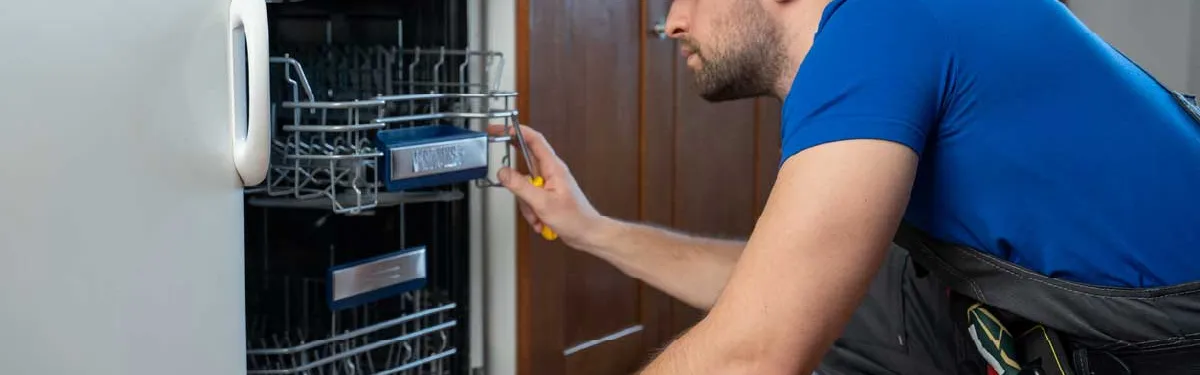

| Median Wage (USD, 2024) | Projected Job Openings (2023-2033) | Projected Growth (2023-2033) | |
|---|---|---|---|
| National Statistics | $49,410 | 3100 | 0.8% |
| State Statistics | - | - | - |
| City Statistics | - | - | - |
Experience Requirements Overview
- Job Zone Two: Some Preparation Needed
- Some previous work-related skill, knowledge, or experience is usually needed. For example, a teller would benefit from experience working directly with the public.
- These occupations usually require a high school diploma.
- Employees in these occupations need anywhere from a few months to one year of working with experienced employees. A recognized apprenticeship program may be associated with these occupations.
Education, Training and Experience
Required Level of Education: High School Diploma - or the equivalent (for example, GED)
Related Work Experience: N.A.
On-Site or In-Plant Training: Over 6 months, up to and including 1 year
On-the-Job Training: Over 6 months, up to and including 1 year
Detailed Work Activities
- Disassemble equipment for maintenance or repair.
- Collect payments for goods or services.
- Test electrical circuits or components for proper functioning.
- Repair worn, damaged, or defective mechanical parts.
- Replace worn, damaged, or defective mechanical parts.
Work Values
Achievement
Occupations that satisfy this work value are results oriented and allow employees to use their strongest abilities, giving them a feeling of accomplishment. Corresponding needs are Ability Utilization and Achievement.
Working Conditions
Recognition
Relationships
Support
Independence
Tasks
- Bill customers for repair work, and collect payment.
- Observe and examine appliances during operation to detect specific malfunctions such as loose parts or leaking fluid.
- Talk to customers or refer to work orders to establish the nature of appliance malfunctions.
- Refer to schematic drawings, product manuals, and troubleshooting guides to diagnose and repair problems.
- Trace electrical circuits, following diagrams, and conduct tests with circuit testers and other equipment to locate shorts and grounds.
- Replace worn and defective parts such as switches, bearings, transmissions, belts, gears, circuit boards, or defective wiring.
- Provide repair cost estimates, and recommend whether appliance repair or replacement is a better choice.
- Disassemble appliances so that problems can be diagnosed and repairs can be made.
- Respond to emergency calls for problems such as gas leaks.
- Service and repair domestic electrical or gas appliances, such as clothes washers, refrigerators, stoves, and dryers.
- Reassemble units after repairs are made, making adjustments and cleaning and lubricating parts as needed.
- Record maintenance and repair work performed on appliances.
- Test and examine gas pipelines and equipment to locate leaks and faulty connections, and to determine the pressure and flow of gas.
- Light and adjust pilot lights on gas stoves, and examine valves and burners for gas leakage and specified flame.
- Instruct customers regarding operation and care of appliances, and provide information such as emergency service numbers.
- Contact supervisors or offices to receive repair assignments.
- Maintain stocks of parts used in on-site installation, maintenance, and repair of appliances.
- Level refrigerators, adjust doors, and connect water lines to water pipes for ice makers and water dispensers, using hand tools.
- Observe and test operation of appliances following installation, and make any initial installation adjustments that are necessary.
- Set appliance thermostats, and check to ensure that they are functioning properly.
- Install appliances such as refrigerators, washing machines, and stoves.
- Level washing machines and connect hoses to water pipes, using hand tools.
- Clean and reinstall parts.
- Clean, lubricate, and touch up minor defects on newly installed or repaired appliances.
- Conserve, recover, and recycle refrigerants used in cooling systems.
- Install gas pipes and water lines to connect appliances to existing gas lines or plumbing.
- Take measurements to determine if appliances will fit in installation locations, performing minor carpentry work when necessary to ensure proper installation.
- Measure, cut, and thread pipe, and connect it to feeder lines and equipment or appliances, using rules and hand tools.
- Assemble new or reconditioned appliances.
Work Styles
Achievement/Effort
Job requires establishing and maintaining personally challenging achievement goals and exerting effort toward mastering tasks.
Persistence
Initiative
Leadership
Cooperation
Concern for Others
Social Orientation
Self-Control
Stress Tolerance
Adaptability/Flexibility
Dependability
Attention to Detail
Integrity
Independence
Innovation
Analytical Thinking
Data Source: This page includes information from the O*NET 30.0 Database by the U.S. Department of Labor, Employment and Training Administration (USDOL/ETA). Used under the CC BY 4.0 license. O*NET® is a trademark of USDOL/ETA. This page includes Employment Projections program, Occupational Employment and Wage Statistics program, U.S. Bureau of Labor Statistics.