Colleges by Location
Colleges by Fields of Study
Colleges by Tuition Range
Colleges by GPA Range
College by SAT Range
Colleges by ACT Score
Graduate Schools by Location
Graduate Schools by Fields of Study
Graduate School by Degree Type
Paying for Graduate School
Online Graduate Programs
Test Preparation
Career Planning
College Planning
Graduate School Planning
Applying to Graduate School
- More
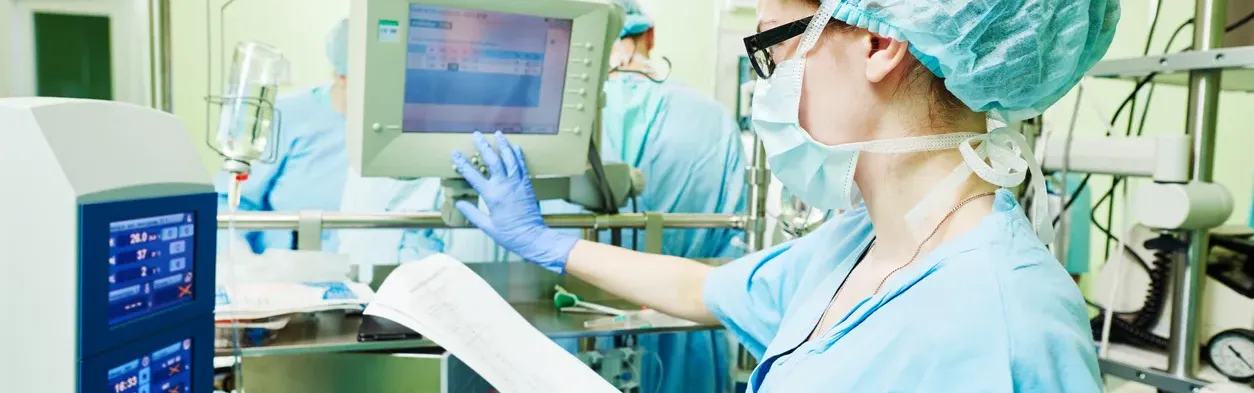

A perfusionist is a specialized healthcare professional who temporarily assumes the heart and lung functions during cardiac surgery, enabling the surgeon to operate on a still heart. They operate the heart-lung machine to pump and oxygenate blood, manage the patient's physiological and metabolic needs, and administer the drug that stops the heart. While most of their work occurs in the operating room, perfusionists may also support the cardiovascular ICU and catheterization lab. Their role requires monitoring blood parameters, manipulating mechanical and pharmacological variables, and understanding complex respiratory and circulatory systems. They also help select appropriate extracorporeal equipment in collaboration with the surgeon.
Education, Training and Experience
- Perfusionists usually earn a four-year degree with coursework in biology, chemistry, anatomy, and physiology, plus specialized perfusion training; however, a science background is not required.
- Accredited perfusion programs award master's degrees, bachelor's degrees, or clinical perfusion certificates.
- The Certified Clinical Perfusionist (CCP) credential, administered by the American Board of Cardiovascular Perfusion, is required for practice.
- CCP candidates must complete an accredited program and perform at least 75 primary perfusion cases before taking the certification exam.
- Annual recertification requires continuing education and documented work experience.
- Perfusionists must tolerate high stress, work under pressure, maintain precision, and withstand long surgeries.
- They must also stay current with evolving technology and continuously update their skills.
Detailed Work Activities
- Perfusionists review the patient's medical history and current health status before surgery.
- Along with the surgeon, they determine the circulation equipment and techniques required.
- In the operating room, they prepare and check the heart-lung machine and all necessary equipment.
- After connecting the patient, they continually monitor circulation, hemodynamics, temperature, and blood composition.
- The surgeon and anesthesiology team direct pharmacologic and transfusion interventions performed by the perfusionist.
- Continuous communication with the surgical team is essential for patient safety.
- Perfusionists typically work full-time schedules but also take call on nights, weekends, and holidays; busy centers may use shift coverage.
- Career paths include clinical practice, teaching, research, and roles with perfusion equipment manufacturers.
Table of Contents:
For more information on this career visit: https://explorehealthcareers.org/careers/allied-health-professions/perfusionist/
Data Source: ExploreHealthcareers.org