Colleges by Location
Colleges by Fields of Study
Colleges by Tuition Range
Colleges by GPA Range
College by SAT Range
Colleges by ACT Score
Graduate Schools by Location
Graduate Schools by Fields of Study
Graduate School by Degree Type
Paying for Graduate School
Online Graduate Programs
Test Preparation
Career Planning
College Planning
Graduate School Planning
Applying to Graduate School
- More

| Median Wage (USD, 2025) | Projected Job Openings (2025-2035) | Projected Growth (2025-2035) | |
|---|---|---|---|
| National Statistics | $61390 | 500 | 0.0% |
| State Statistics | - | - | - |
| City Statistics | - | - | - |
Experience Requirements Overview
- Job Zone 1-2: Very Little to Some Preparation Needed
- Some occupations may need little or no previous experience; others require several months to a year of experience. For example, landscaping and groundskeeping workers might require very little training or previous experience, while agricultural equipment operators can benefit from on-the job training.
- Usually requires a high school diploma or GED, though some occupations may not.
- Ranges from a few days to one year of on-the-job training.
Education, Training and Experience
Required Level of Education: High School Diploma or the equivalent (such as a GED)
Related Work Experience: Over 2 years, up to and including 4 years
On-Site or In-Plant Training: Up to and including 1 month
On-the-Job Training: Over 2 years, up to and including 4 years
Detailed Work Activities
- Develop equipment or component configurations.
- Record operational or environmental data.
- Remove debris or vegetation from work sites.
- Drill holes in earth or rock.
- Signal equipment operators to indicate proper equipment positioning.
Work Values
Achievement
Occupations that satisfy this work value are results oriented and allow employees to use their strongest abilities, giving them a feeling of accomplishment. Corresponding needs are Ability Utilization and Achievement.
Working Conditions
Recognition
Relationships
Support
Independence
Tasks
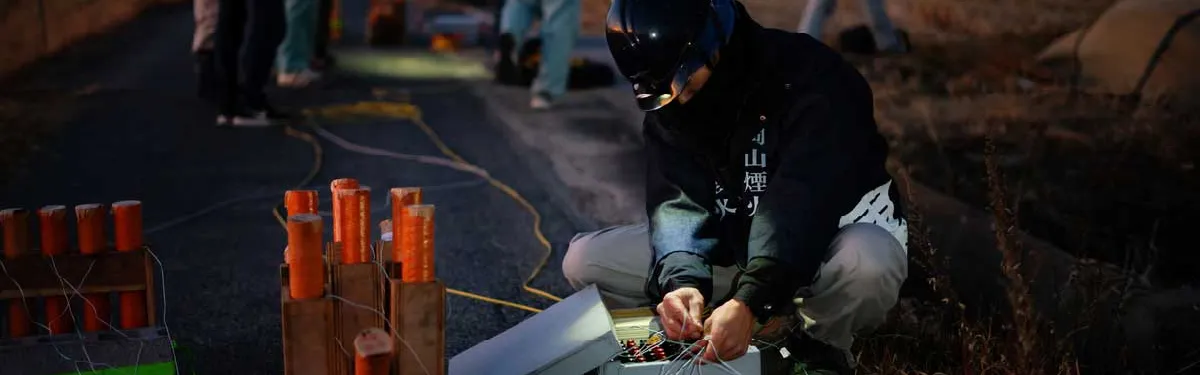
- Examine blast areas to determine amounts and kinds of explosive charges needed and to ensure that safety laws are observed.
- Tie specified lengths of delaying fuses into patterns in order to time sequences of explosions.
- Place safety cones around blast areas to alert other workers of danger zones, and signal workers as necessary to ensure that they clear blast sites prior to explosions.
- Place explosive charges in holes or other spots; then detonate explosives to demolish structures or to loosen, remove, or displace earth, rock, or other materials.
- Insert, pack, and pour explosives, such as dynamite, ammonium nitrate, black powder, or slurries into blast holes; then shovel drill cuttings, admit water into boreholes, and tamp material to compact charges.
- Mark patterns, locations, and depths of charge holes for drilling, and issue drilling instructions.
- Compile and keep gun and explosives records in compliance with local and federal laws.
- Measure depths of drilled blast holes, using weighted tape measures.
- Connect electrical wire to primers, and cover charges or fill blast holes with clay, drill chips, sand, or other material.
- Lay primacord between rows of charged blast holes, and tie cord into main lines to form blast patterns.
- Assemble and position equipment, explosives, and blasting caps in holes at specified depths, or load perforating guns or torpedoes with explosives.
- Verify detonation of charges by observing control panels, or by listening for the sounds of blasts.
- Move and store inventories of explosives, loaded perforating guns, and other materials, according to established safety procedures.
- Light fuses, drop detonating devices into wells or boreholes, or activate firing devices with plungers, dials, or buttons, in order to set off single or multiple blasts.
- Drive trucks to transport explosives and blasting equipment to blasting sites.
- Cut specified lengths of primacord and attach primers to cord ends.
- Maintain inventory levels, ordering new supplies as necessary.
- Repair and service blasting, shooting, and automotive equipment, and electrical wiring and instruments, using hand tools.
- Set up and operate short-wave radio or field telephone equipment to transmit and receive blast information.
- Insert waterproof sealers, bullets, and/or powder charges into guns, and screw gun ports back into place.
- Clean, gauge, and lubricate gun ports.
- Lower perforating guns into wells, using hoists; then use measuring devices and instrument panels to position guns in correct positions for taking samples.
- Create and lay out designs for drill and blast patterns.
- Document geological formations encountered during work.
- Operate machines to flush earth cuttings or to blow dust from holes.
- Set up and operate equipment such as hoists, jackhammers, and drills, in order to bore charge holes.
- Signal crane operators to move equipment.
Work Styles
Innovation
A tendency to be inventive, to be imaginative, and to adopt new perspectives on ways to accomplish work.
Achievement Orientation
Intellectual Curiosity
Tolerance for Ambiguity
Initiative
Adaptability
Self-Confidence
Perseverance
Leadership Orientation
Humility
Sincerity
Empathy
Cooperation
Optimism
Social Orientation
Cautiousness
Attention to Detail
Dependability
Integrity
Stress Tolerance
Self-Control
Data Source: This page includes information from the O*NET 31.0 Database by the U.S. Department of Labor, Employment and Training Administration (USDOL/ETA). Used under the CC BY 4.0 license. O*NET® is a trademark of USDOL/ETA. This page includes Employment Projections program, Occupational Employment and Wage Statistics program, U.S. Bureau of Labor Statistics.